Sub-Total: £0.00
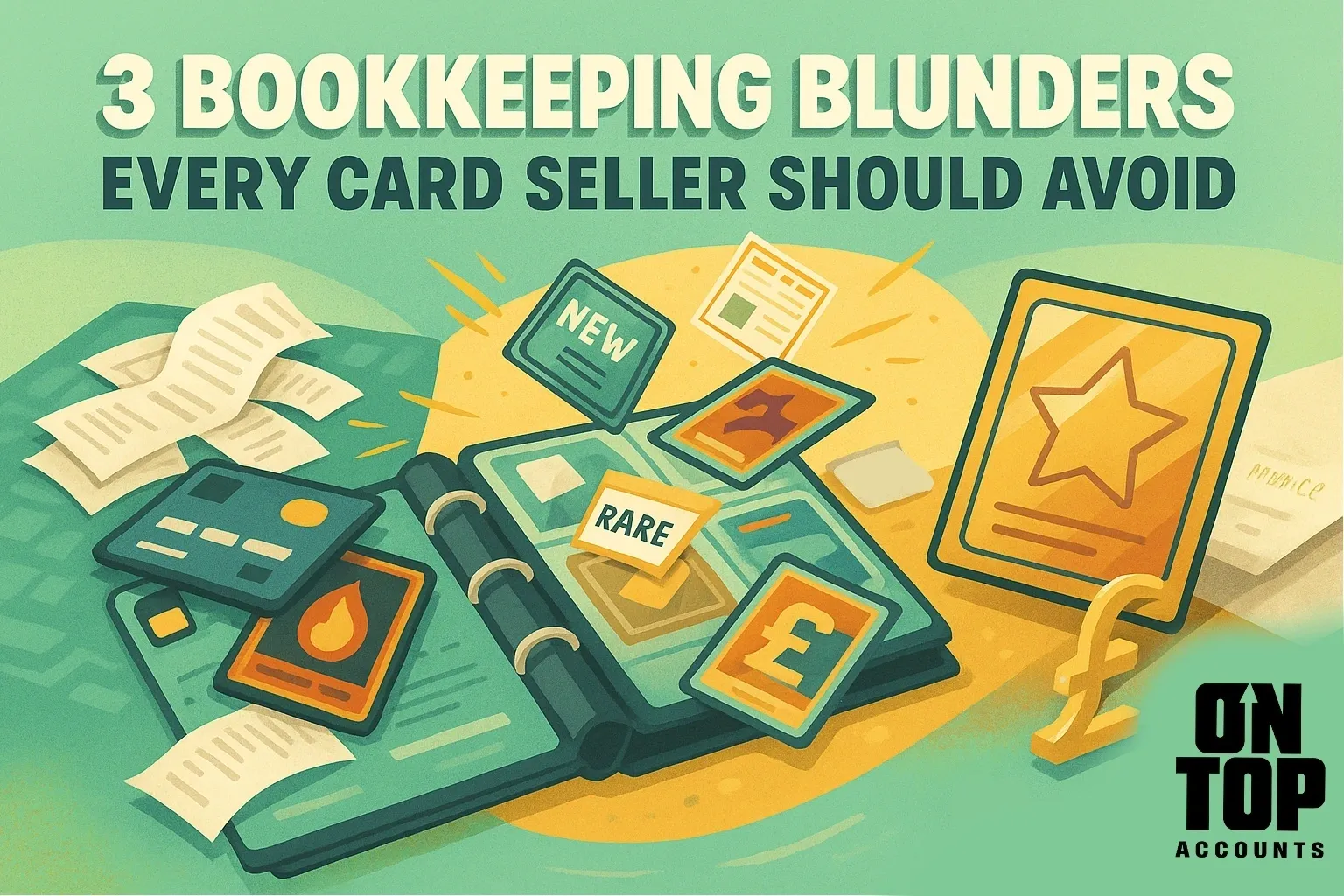
Bookkeeping Blunders
Every Card Seller Should Avoid (and How to Fix Them)
In the trading card world, a shiny Charizard or a flawless rookie card can spark excitement in seconds. But behind the thrill of the hobby lies a truth many overlook:
1 in 3 card sellers don’t track their expenses.
That’s a big risk.
If you want your card business to grow – and stay profitable – clean, clear bookkeeping is essential. It’s not just for tax season. It’s your foundation.
Let’s explore the three most common mistakes card sellers make—and how you can fix them fast.
1. Mixing Personal and Business Finances
❌ The Mistake:
You buy a rare collection with the first bank card you can grab. Was it your business account? Your personal one?
At the moment, it feels like no big deal. But when tax season comes around – or you try to check your profit – it’s a mess.
✅ The Fix:
Keep it clean and simple:
- Open a dedicated business bank account
- Use that account for all card-related income and expenses
- Avoid mixing personal purchases, even if they’re small
Want to go further? Use tools like Xero or QuickBooks to:
- Track income and expenses
- Categorize transactions automatically
- Make tax time way easier
2. Ignoring Inventory Tracking
❌ The Mistake:
You’re buying and selling fast. You think you know what’s in stock. You check eBay, 130Point, or scribbled notes when needed.
But over time, guesswork adds up—leading to pricing mistakes, missed sales, and profit leaks.
✅ The Fix:
Use proper inventory tools made for card sellers.
Try apps like:
- TCGPlayer Pro
- CrystalCommerce
- Bindr, CardCastle, or Market Movers (if you value condition and comps)
These tools help you:
- Track stock in real time
- Sync pricing across platforms
- Forecast which sets are hot—or not
Connect these with your accounting software and suddenly, your whole system talks to each other. That’s how businesses scale.
3. Overlooking Expense Deductions
❌ The Mistake:
You don’t write down all your business costs. Some just seem too small to bother with – like sleeves, shipping labels, or show entry fees.
But those “small” costs add up fast.
✅ The Fix:
Start a simple habit:
- Log every business-related expense
- Keep digital receipts
- Create a monthly expense tracker
Deductible examples include:
- Postage and packaging
- Marketplace fees (e.g. eBay, Whatnot)
- Card show travel costs (mileage, meals)
- Storage boxes, binders, sleeves, top loaders
- Home office portion (if applicable)
Talk to a tax pro who understands eCommerce and collectibles. A good accountant can help you reclaim more than you think.
Final Thoughts: Build a Business as Sharp as Your Best Pull
The adrenaline of a pack opening is great. But you know what feels just as good?
- Knowing your books are accurate
- Seeing your true profit clearly
- Staying ahead of tax stress
Avoid these three blunders and you’ll run your card business like a pro—not just a collector.
Share Your Wins & Warnings
Got a horror story or a bookkeeping hack that saved you? Drop it in the comments or join our Discord.
Let’s level up the card community- one ledger at a time.